
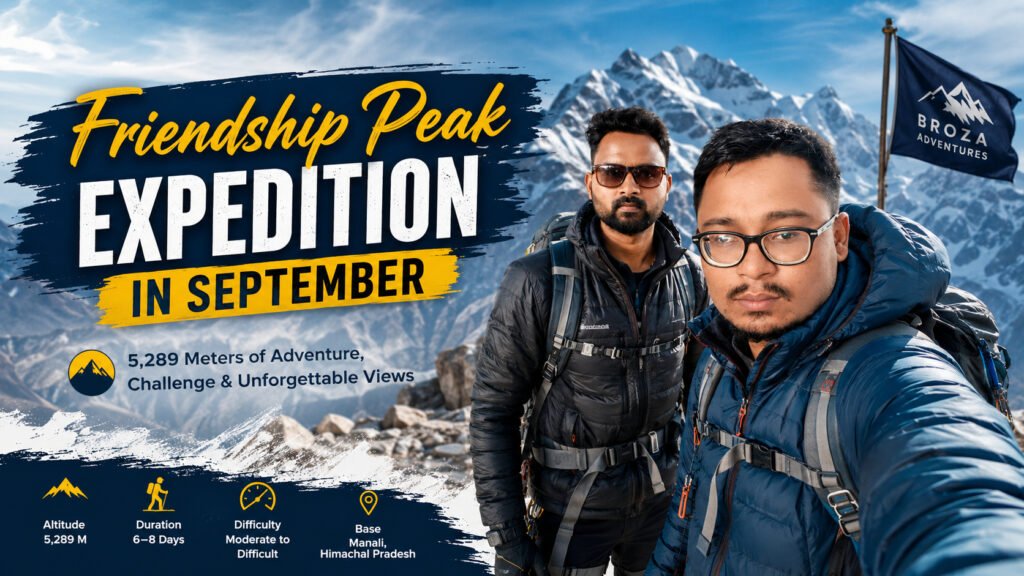
September is one of the most rewarding months to plan a high-altitude climb in the Manali region, with clearer mountain landscapes and a transition toward autumn conditions. The Friendship Peak Expedition combines challenging terrain, acclimatization, mountain training, and a spectacular summit objective at 5,289 metres.
For adventure enthusiasts looking for a serious Himalayan experience without moving into an extremely long expedition, September offers an exciting climbing window. The Friendship Peak Expedition by Broza Adventures is designed around gradual altitude gain, experienced guidance, and preparation for the summit.
Friendship Peak Expedition in September
September brings a distinctive character to the mountain, as the landscape gradually shifts from monsoon greenery toward crisp autumn conditions. The Friendship Peak Expedition in September is particularly appealing because the route can offer excellent visibility while the terrain becomes progressively more rugged and rocky.
Why Choose September for Friendship Peak?

September is widely considered one of the favourable periods for climbing Friendship Peak, alongside May–June and October. The Friendship Peak Expedition during this month allows climbers to experience alpine meadows, moraine sections, rocky terrain and high-altitude landscapes before winter becomes dominant.
September Expedition Highlights
- Autumn mountain scenery: September can provide impressive views as the monsoon period recedes.
- High-altitude challenge: The Friendship Peak altitude reaches 5,289 metres.
- Technical learning: Participants may encounter snow, glacier and steep terrain requiring appropriate mountain equipment.
- Manali approach: The expedition begins around the Manali–Solang Valley region.
- Strong summit objective: The Friendship Peak height of 5,289 metres makes it a serious introduction to Himalayan peak climbing.
| Friendship Peak September Facts | Details |
|---|---|
| Summit altitude | 5,289 m / 17,352 ft |
| Mountain range | Pir Panjal Range |
| Region | Near Manali, Himachal Pradesh |
| Difficulty | Moderate to Difficult |
| Typical duration | Around 6–9 days |
| September terrain | Rocky, alpine and potentially snowy at higher sections |
The exact conditions on the mountain can change with weather, snowfall and route conditions. The Friendship Peak Expedition therefore requires flexibility, proper acclimatization and careful decisions on the mountain.
Understanding Friendship Peak Altitude

At 5,289 metres, Friendship Peak presents a significant altitude challenge even for experienced trekkers. The Friendship Peak altitude means oxygen availability is considerably lower than at sea level, making gradual ascent and acclimatization essential.
The mountain’s height also makes summit day physically demanding, particularly when combined with steep gradients and changing weather. The Friendship Peak Expedition with Broza Adventures focuses on controlled progression so participants can conserve energy for the summit attempt.
| Altitude Point | Approximate Elevation |
|---|---|
| Manali | 2,050 m |
| Bakarthach region | Around 3,300–3,500 m |
| Lady Leg Base Camp | Around 3,900 m |
| Summit | 5,289 m |
What Makes the September Climb Challenging?
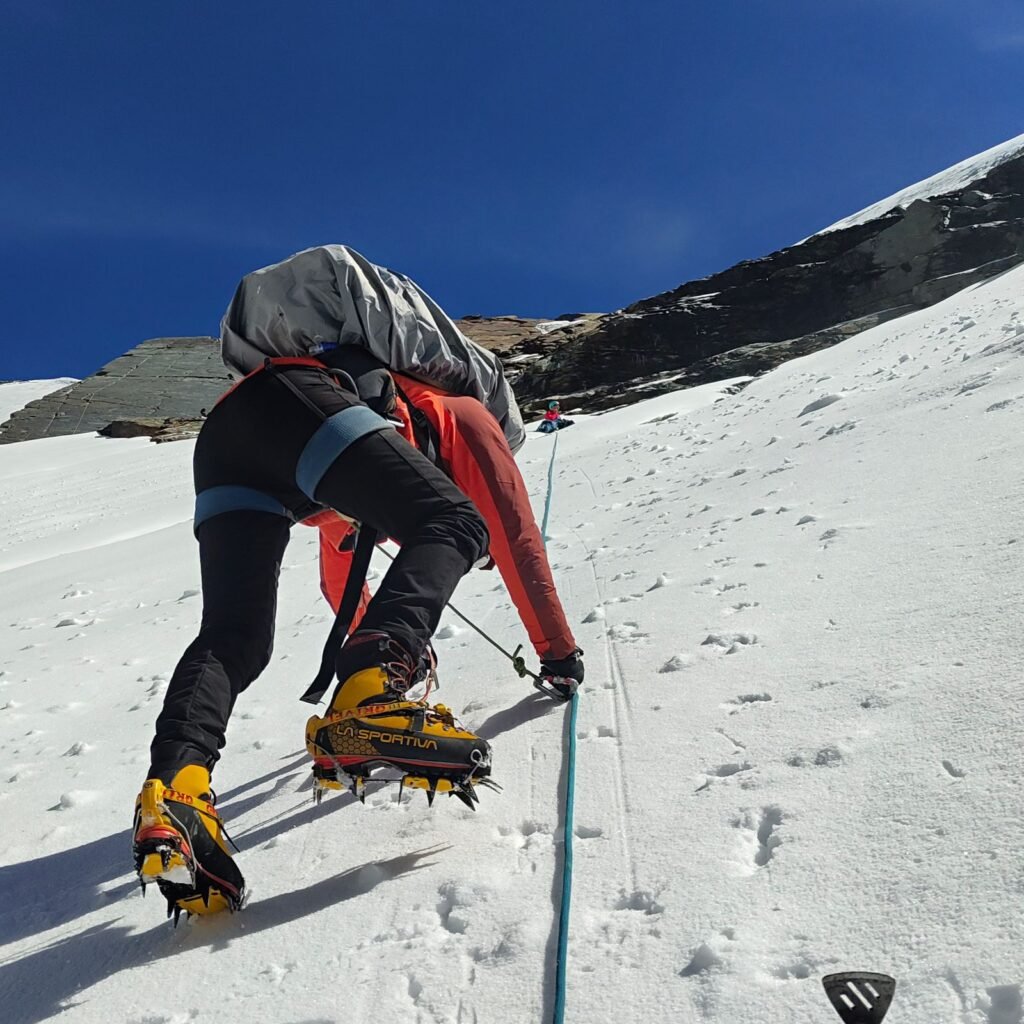
September does not mean easy conditions at high altitude, because temperatures can fall sharply after sunset and mountain weather can change quickly. The Friendship Peak Expedition requires endurance, appropriate clothing, hydration and the ability to walk for extended periods at altitude.
- Altitude: Thin air becomes a major factor above 4,000 metres.
- Steep sections: The upper route demands strong legs and stamina.
- Variable weather: Conditions can change rapidly around the summit.
- Mountain equipment: Crampons, ice axes, ropes and other equipment may be required depending on conditions.
- Long summit day: The final ascent requires careful pacing and determination.
The Friendship Peak trek is therefore better suited to physically prepared adventurers rather than casual weekend trekkers. Broza Adventures incorporates preparation and guidance to help participants approach the mountain responsibly.
September Weather and Trail Conditions
September generally marks the transition from monsoon toward autumn in the region, while higher elevations can still experience unpredictable mountain weather. The Friendship Peak Expedition can encounter a combination of dry rocky sections, moraine, snow patches and colder summit conditions depending on the season.
| September Condition | What Trekkers Should Expect |
|---|---|
| Lower trail | Green landscapes and alpine surroundings |
| Mid-altitude | Cooler temperatures and rocky/moraine terrain |
| Higher camps | Cold nights and possible snow |
| Summit zone | Very cold, exposed and weather-sensitive |
| Visibility | Often rewarding, but never guaranteed |
The Friendship Peak height creates a substantial difference between the lower valleys and summit environment. Climbers should therefore pack for multiple weather conditions rather than relying solely on September’s lower-altitude climate.
Fitness and Preparation for September
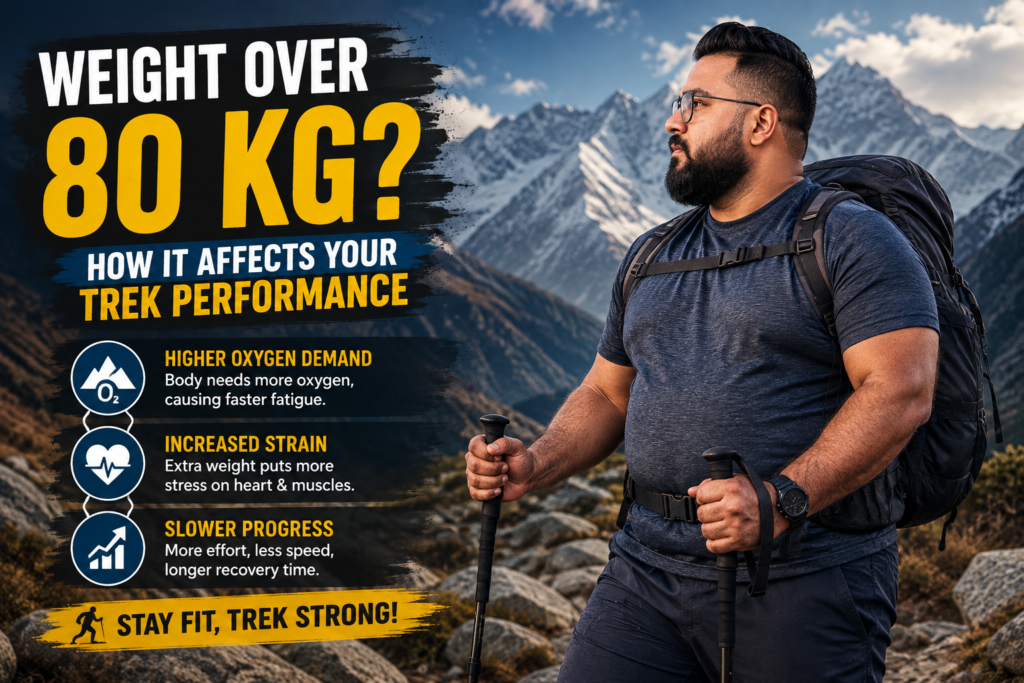
A successful summit attempt begins well before reaching Manali. The Friendship Peak Expedition demands cardiovascular endurance, leg strength, balance and the ability to recover after consecutive trekking days.
- Run, brisk-walk or cycle regularly before departure.
- Include stair climbing to strengthen your legs.
- Build endurance through long-distance walking.
- Practice carrying a comfortable backpack.
- Maintain consistent strength and mobility training.
Broza Adventures recommends approaching the expedition with realistic expectations and disciplined preparation. The Friendship Peak trek becomes significantly more manageable when participants arrive physically prepared.
Why Choose Broza Adventures?
Broza Adventures structures the expedition around the realities of high-altitude climbing rather than treating it as an ordinary trek. The Friendship Peak Expedition includes progressive movement, mountain guidance, equipment awareness and summit-focused preparation.
- Experienced expedition planning
- Structured acclimatization approach
- Mountain safety guidance
- Training for essential climbing equipment
- Focus on participant preparation and summit strategy
For adventurers targeting their first major Himalayan summit, the combination of challenge, scenery and mountaineering exposure makes this expedition an exciting objective. The Friendship Peak Expedition with Broza Adventures offers an opportunity to experience the Pir Panjal landscape while working toward a 5,289-metre summit.
Frequently Asked Questions about Friendship Peak Expedition
1. What is the Friendship Peak height?
Friendship Peak stands at 5,289 metres (17,352 feet) above sea level. The Friendship Peak Expedition takes climbers to this high-altitude summit.
2. Is September a good month for the expedition?
Yes, September is considered a favourable climbing period. The Friendship Peak Expedition in September can offer a strong combination of autumn scenery and suitable climbing conditions.
3. What is the Friendship Peak altitude?
The summit reaches 5,289 metres. The Friendship Peak altitude makes acclimatization a critical part of the journey.
4. How difficult is the climb?
It is generally rated moderate to difficult. The Friendship Peak Expedition involves high altitude, steep terrain and demanding summit-day conditions.
5. How long is the expedition?
Broza Adventures lists the expedition around a 6–8 day format, depending on the itinerary. The Friendship Peak Expedition schedule may vary according to mountain and operational conditions.
6. Where does the expedition start?
The approach is based around Manali and the Solang Valley region. The Friendship Peak Expedition then progresses toward higher camps and the summit.
7. Is previous trekking experience useful?
Yes, previous high-altitude trekking experience is highly beneficial. The Friendship Peak trek becomes more manageable when participants have developed endurance and altitude experience.
8. What equipment may be needed?
Depending on conditions, climbers may use crampons, ice axes, ropes, harnesses and other mountaineering equipment. The Friendship Peak Expedition requires participants to follow professional instructions regarding equipment and mountain movement.
9. What should I expect on summit day?
Expect an early start, sustained physical effort and rapidly changing mountain conditions. The Friendship Peak Expedition summit push requires patience, pacing and strict adherence to safety instructions.
10. Why choose Broza Adventures for September?
Broza Adventures focuses on structured planning, acclimatization, safety and guided mountain experiences. The Friendship Peak Expedition is planned to help prepared adventurers pursue the 5,289-metre summit with confidence and responsible mountain practices.