
Planning an adventure at high altitude requires careful health assessment before departure. Friendship Peak Expedition poses unique challenges that demand peak physical condition from every participant. Smokers often wonder about their eligibility for such trips due to lung concerns. Friendship Peak Expedition involves altitudes where oxygen levels drop significantly and recovery takes longer.
Many adventure seekers with habits like smoking still succeed with proper preparation and guidance. Friendship Peak Expedition remains accessible when health risks are managed through training and expert support.
Can A Smoker Go For Friendship Peak Expedition?
Friendship Peak Expedition attracts many outdoor enthusiasts seeking high-altitude thrills in the Himalayas. Smokers can participate if they meet fitness standards and follow medical advice carefully. Friendship Peak Expedition reaches elevations that stress the respiratory system more than sea-level activities. Reduced lung capacity from tobacco use increases the chance of altitude-related issues during the journey. Friendship Peak Expedition demands strong cardiovascular endurance to handle thin air effectively.
Understanding the Challenges for Smokers
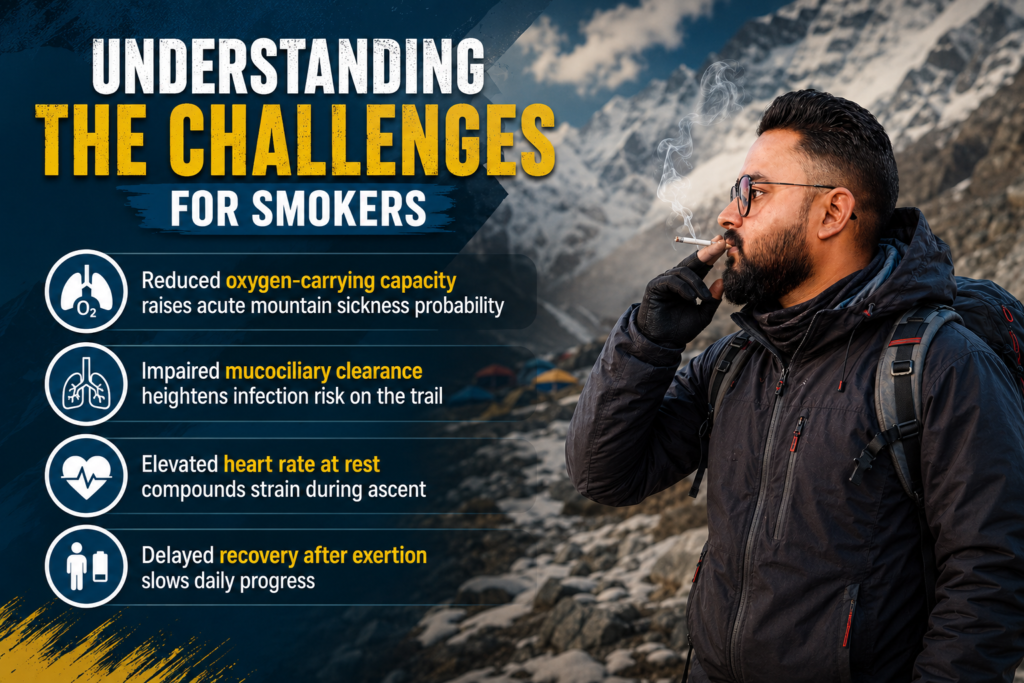
Scientific studies show that carbon monoxide from cigarettes binds to hemoglobin and lowers oxygen delivery by up to fifteen percent. Friendship Peak Expedition occurs in environments where ambient oxygen is already scarce above four thousand meters. Chronic smokers experience lower forced expiratory volume which limits efficient breathing under stress. Friendship Peak Expedition therefore requires smokers to evaluate their daily consumption levels honestly. Light smokers who consume fewer than five cigarettes daily face moderate risks compared to heavier users. Friendship Peak Expedition success rates improve when participants quit or reduce smoking weeks in advance.
- Reduced oxygen-carrying capacity raises acute mountain sickness probability
- Impaired mucociliary clearance heightens infection risk on the trail
- Elevated heart rate at rest compounds strain during ascent
- Delayed recovery after exertion slows daily progress
Levels of Smoking and Fitness Requirements
Light smokers under ten cigarettes per day can usually adapt with structured aerobic training lasting eight weeks. Friendship Peak Expedition becomes safer for moderate smokers after lung function tests confirm adequate capacity. Heavy smokers exceeding one pack daily should seek medical clearance and consider postponing until habits improve. Friendship Peak Expedition organizers assess resting oxygen saturation and six-minute walk test results. Former smokers who quit more than three months earlier often perform nearly as well as non-smokers. Friendship Peak Expedition preparation includes progressive hiking with weighted packs to build resilience.
Alcohol Consumers and High Altitude Risks
Alcohol acts as a diuretic and worsens dehydration which is already common at elevation. Friendship Peak Expedition participants who drink regularly must stop consumption at least two weeks prior. Scientific data link alcohol to impaired judgment and poorer sleep quality during acclimatization phases. Friendship Peak Expedition guidelines strictly prohibit drinking on the trail to protect group safety. Even moderate consumers experience amplified headache and nausea symptoms under hypoxia. Friendship Peak Expedition teams monitor hydration closely for those with recent alcohol history.
Weight Considerations Over 80 kg
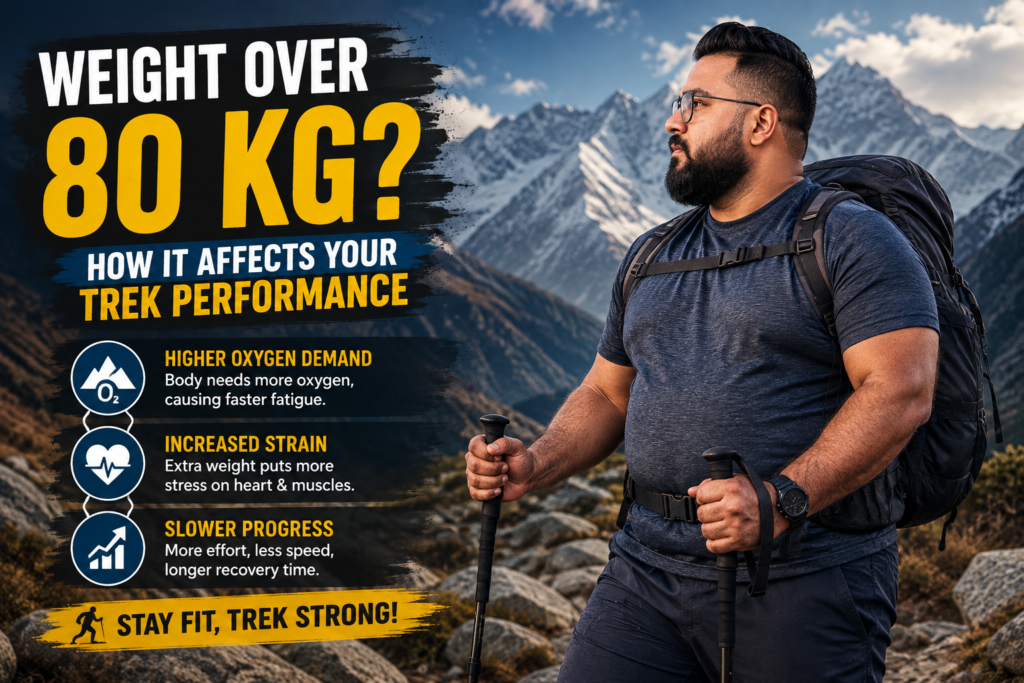
Individuals weighing more than eighty kilograms place greater demand on the heart and lungs during climbs. Friendship Peak Expedition trails feature steep gradients that multiply energy expenditure for heavier bodies. Higher body mass correlates with elevated acute mountain sickness incidence according to altitude medicine research. Friendship Peak Expedition recommends gradual weight management combined with strength training beforehand. Excess weight also increases joint stress on rocky and snowy sections of the route. Friendship Peak Expedition medical screening includes body mass index evaluation for all applicants.
| Factor | Impact on Performance | Recommended Action |
|---|---|---|
| Smoking intensity | Lowers VO2 max | Reduce or quit 4-6 weeks prior |
| Alcohol use | Dehydration risk | Complete abstinence 14 days before |
| Weight over 80 kg | Higher oxygen demand | Focused cardio and diet plan |
Scientific Facts on Smoking and Altitude
Research from high-altitude physiology confirms that smokers show steeper drops in arterial oxygen saturation. Friendship Peak Expedition altitudes typically range between four thousand and five thousand three hundred meters. Carboxyhemoglobin levels remain elevated for hours after the last cigarette and hinder adaptation. Friendship Peak Expedition acclimatization schedules allow extra rest days when needed for compromised participants. Peak expiratory flow rates decline faster in smokers under cold dry conditions. Friendship Peak Expedition success depends on early detection of symptoms through pulse oximetry checks.
- Carbon monoxide half-life extends under low oxygen pressure
- Pulmonary vasoconstriction intensifies in tobacco users
- Inflammatory markers rise more sharply during ascent
- Sleep quality deteriorates faster leading to fatigue
Preparation Tips for Friendship Peak Trek
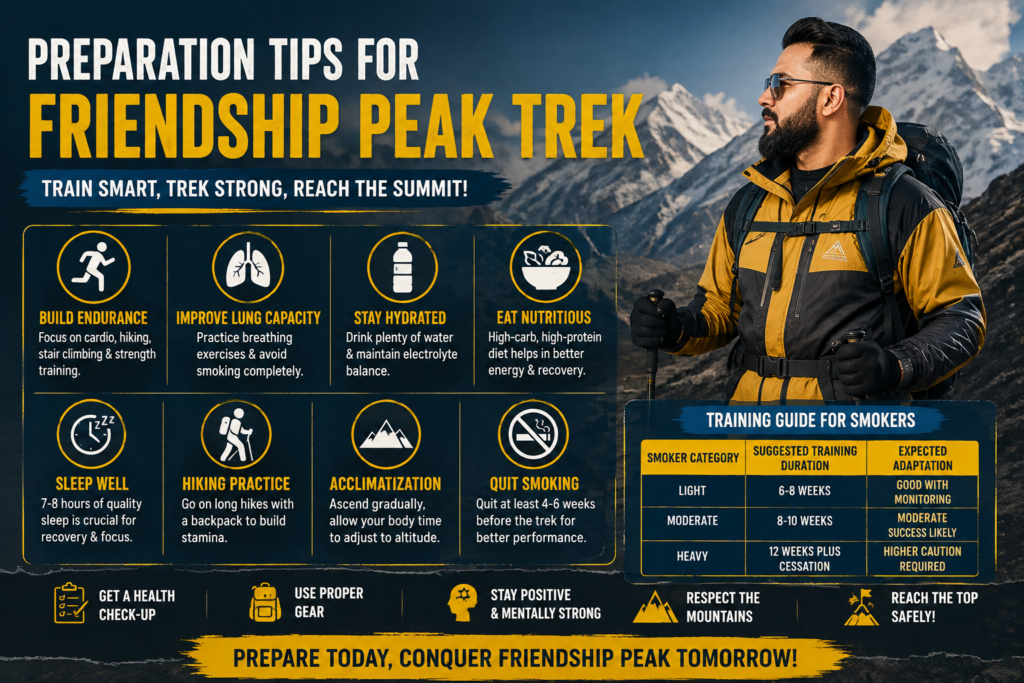
Begin cardiovascular training with daily brisk walking that progresses to stair climbing and incline treadmill sessions. Friendship Peak Expedition preparation benefits from breathing exercises that strengthen diaphragmatic control. Include interval training to improve oxygen utilization efficiency over time. Friendship Peak Expedition gear selection should prioritize lightweight items to reduce load for heavier participants. Consult a physician for spirometry and stress tests before finalizing plans. Friendship Peak Expedition itineraries from experienced operators incorporate gradual elevation gain for safety.
| Smoker Category | Suggested Training Duration | Expected Adaptation |
|---|---|---|
| Light | 6-8 weeks | Good with monitoring |
| Moderate | 8-10 weeks | Moderate success likely |
| Heavy | 12 weeks plus cessation | Higher caution required |
Why Choose Broza Adventures
Broza Adventures stands as the best option if you are planning for Friendship Peak Expedition because of specialized health protocols. Friendship Peak Expedition groups receive continuous monitoring by trained mountain guides. Customized fitness assessments help smokers and heavier individuals prepare effectively. Friendship Peak Expedition packages include detailed medical briefings and emergency response readiness. Experienced leadership ensures safe pacing tailored to varied fitness levels. Friendship Peak Expedition with Broza Adventures delivers reliable support throughout the friendship peak trekking experience.
| Participant Profile | Support Provided | Outcome Focus |
|---|---|---|
| Smokers | Lung capacity guidance | Safe completion |
| Alcohol history | Hydration protocols | Symptom prevention |
| Over 80 kg | Load management tips | Reduced strain |
Frequently Asked Questions abiut Friendship Peak Expedition
Can light smokers join Friendship Peak Expedition without quitting completely?
Yes if they reduce intake and pass fitness checks. Friendship Peak Expedition medical teams evaluate individual cases.
Do heavy smokers face automatic exclusion from friendship peak trek?
Not always but medical clearance is mandatory. Friendship Peak Expedition prioritizes participant safety above all.
How does alcohol affect performance on friendship peak?
It increases dehydration and AMS risk significantly. Friendship Peak Expedition rules ban consumption during the trip.
Is weight above 80 kg a barrier for friendship peak trekking?
It raises challenges yet proper training overcomes most issues. Friendship Peak Expedition adapts itineraries when needed.
What scientific evidence supports smoker participation in Friendship Peak Expedition?
Studies show adaptation is possible after cessation or reduction. Friendship Peak Expedition applies these findings practically.
Should smokers undergo specific tests before friendship peak?
Spirometry and oxygen saturation tests are recommended. Friendship Peak Expedition requires recent medical reports.
Can former smokers perform well on friendship peak trek?
Often yes after three months of abstinence. Friendship Peak Expedition welcomes recovered participants.
How long before Friendship Peak Expedition should alcohol stop?
At least fourteen days is advised for full recovery. Friendship Peak Expedition enforces this for group welfare.
Does Broza Adventures offer special guidance for heavier participants?
Yes through customized plans and pacing. Friendship Peak Expedition benefits from their expertise.
What makes Broza Adventures ideal for Friendship Peak Expedition planning?
Their focus on health and safety leads the field. Friendship Peak Expedition success rates reflect this commitment.